Who’s Liable When You Slip on an Icy Sidewalk in Jersey City? Commercial vs. Residential Property Rules | The Law Offices of Anthony Carbone
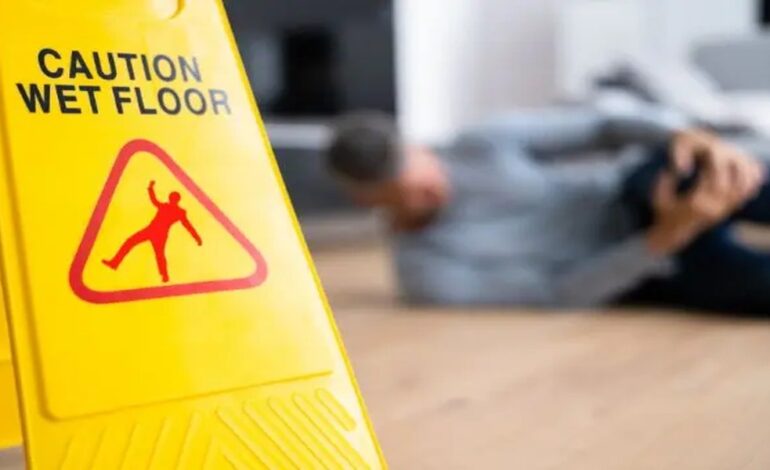

The walk from the PATH station to your apartment in February covers maybe four blocks. Half of those blocks are shoveled and salted. The other half looks like a skating rink. You take a normal step on a stretch of sidewalk in front of a brownstone, your foot slides out, and you land on your hip hard enough that the next morning you cannot stand without help. The question that decides whether you can recover anything is one most people never think about until they are already injured: was that sidewalk in front of a commercial building or a residential one? In Jersey City, the answer changes everything. The Law Offices of Anthony Carbone has handled sidewalk fall cases across Hudson County for more than three decades, and the commercial-residential distinction is the single biggest factor in whether a case moves forward or gets dismissed at the pleading stage.
The Rule That Surprises Most Injured People
New Jersey draws a sharp line between two categories of sidewalk abutters:
- Commercial property owners have a duty to maintain the sidewalk abutting their property in reasonably safe condition, including removing snow and ice within a reasonable time after a storm
- Residential property owners generally have no duty to clear snow and ice from public sidewalks, and are not liable for injuries caused by natural accumulation
The leading case is Stewart v. 104 Wallace Street, Inc., decided by the New Jersey Supreme Court in 1981, which imposed sidewalk liability on commercial owners. The companion principle for residential homeowners was reaffirmed in Luchejko v. City of Hoboken in 2011, where the court declined to extend Stewart to private residences.
Two pedestrians can fall on the same icy block, twenty feet apart, and have completely different cases. One slipped in front of a deli. The other slipped in front of a single-family rowhouse. The deli is on the hook. The rowhouse, in most circumstances, is not.
What Counts as Commercial
The label on the tax record is not the end of the analysis. New Jersey courts look at the actual use of the property:
- A storefront with apartments above it is treated as commercial
- An owner-occupied home with no business use is residential
- A two-family or three-family rental property where the owner does not live there is often treated as commercial, depending on the circumstances
- A mixed-use building with even one commercial tenant on the ground floor is generally commercial for sidewalk purposes
- Vacant lots owned by a developer or holding company can be commercial
The case law has wrestled with edge cases for years. A small landlord with a single rental unit may or may not fall on the commercial side of the line. The analysis turns on whether the property is held for income generation and whether the owner has the means and capability to maintain the sidewalk.
Condos, Co-ops, and Apartment Buildings
Multifamily buildings present their own rules. Condominium associations and homeowners associations typically owe a duty to maintain common-area walkways and abutting sidewalks. Apartment building owners, even when residential in character, are usually treated as commercial because the building is operated for rental income. Falls outside Newport Tower, the high-rises near Grove Street, and the rental complexes off Communipaw Avenue almost always have a commercial defendant available.
The Ongoing Storm Doctrine
The duty to clear snow and ice is not absolute, and timing matters. New Jersey follows the ongoing storm doctrine, which gives commercial property owners a reasonable amount of time after precipitation ends to address hazardous conditions. A fall during an active blizzard at 2 p.m. is harder to pursue than a fall on the same sidewalk at 9 a.m. the next morning when the snow stopped at midnight.
What counts as reasonable time depends on the severity of the storm, the type of property, and the practical ability to clear the walkway. Courts look at whether the owner had actual or constructive notice of the condition and whether a reasonable response would have prevented the fall.
Jersey City’s Local Snow Removal Ordinance
Jersey City Municipal Code requires property owners to clear snow and ice from abutting sidewalks within a set window after precipitation ends, typically 10 hours during daylight or by 1 p.m. the day after a nighttime storm. Failure to comply can result in municipal fines, but the ordinance does not automatically create a private right of action. The civil case still rises and falls on the commercial-residential analysis under state common law, though the ordinance can be admissible evidence of the standard of care.
The same logic applies in Hoboken, Union City, Bayonne, and other Hudson County municipalities, each with their own snow removal ordinances and timing requirements.
When a Residential Homeowner Can Still Be Liable
The general rule shields residential owners from liability for natural accumulation. The exceptions exist and are worth knowing:
- The owner created the hazard, for example by allowing a downspout to discharge water that froze across the sidewalk
- The owner attempted snow removal and made the condition worse, leaving slick patches behind
- A latent defect in the sidewalk itself, like an uplifted slab, caused or contributed to the fall
The “made it worse” theory is narrower than people assume. Simply shoveling poorly is not automatic liability. The plaintiff has to show the homeowner’s actions transformed a natural condition into something more dangerous.
How The Law Offices of Anthony Carbone Builds a Sidewalk Fall Case
Sidewalk cases turn on evidence collected quickly. Snow melts. Witnesses move. Surveillance footage gets overwritten on a 30-day loop. The firm’s investigation typically includes:
- Identifying the precise location of the fall with photographs and measurements before the next storm
- Pulling the tax record and rent roll to establish commercial versus residential use
- Requesting weather data from the National Weather Service to establish when precipitation ended
- Canvassing nearby businesses for surveillance footage and witness statements
- Issuing preservation letters to the property owner and any contracted snow removal vendor
Snow removal contractors add another layer. A commercial landlord who hires a vendor to clear the lot can sometimes shift partial liability to the contractor under the contract terms. Identifying the vendor early opens up additional insurance coverage.
For more reading, the firm’s pages on slip and fall cases and premises liability practice cover related topics. The New Jersey Courts website also publishes the full text of Stewart v. 104 Wallace Street and Luchejko v. City of Hoboken for anyone who wants to read the controlling case law directly.
A fall on an icy sidewalk in Jersey City is not just bad luck if the property next to you is commercial and the owner ignored an obvious hazard. The cases are winnable, but only with prompt investigation, careful documentation, and a clear understanding of where the commercial-residential line falls in your specific situation. The Law Offices of Anthony Carbone offers a free consultation to look at the address, the photographs, and the medical records, and to tell you whether you have a viable claim. Call 201-963-6000 before the evidence melts away with the next thaw.